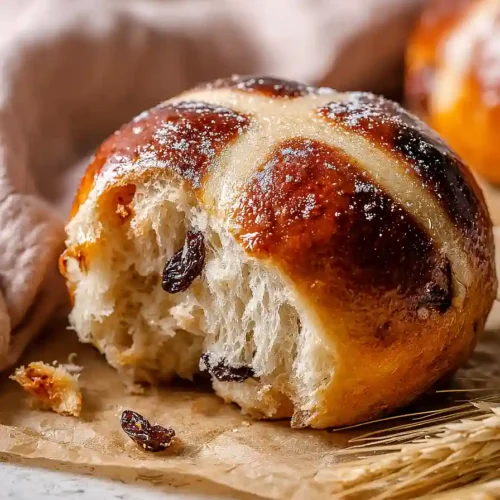
Classic No Knead Hot Cross Buns
Delicious Classic No Knead Hot Cross Buns recipe with step-by-step instructions.
Ingredients
For the dough
- 1.9 oz hazelnuts (toasted and chopped into 1/4-inch pieces)
- 1.2 lb flour (I always use King Arthur all-purpose flour)
- 3 tsp yeast
- 1 tsp cinnamon
- 1 tsp nutmeg
- 1/2 tsp cardamom
- 1/4 tsp allspice
- 2 tsp salt
- 5 tbsp sugar
- 9.3 oz mixed dried fruit (I use Sun-Maid fruit bits)
- 1 lemon zest
- 1 orange zest
- 2.7 fl oz oil (I prefer Wesson vegetable oil for a neutral taste)
- 1 cup + 2 tbsp milk (warmed to 105-115°F)
- 3/4 cup water
For the crosses
- 5 tbsp flour
- water (add 1 tsp at a time until a thick paste forms)
For the glaze
- 2 tbsp sugar
- 2 tbsp boiling water
Instructions
- Preheat your oven to 350°F and toast the hazelnuts on a baking sheet for 10 minutes, shaking the pan halfway through at the 5-minute mark to ensure even browning. Once toasted and cooled slightly, chop them into roughly 1/4-inch pieces. While the nuts toast, measure out all your dry ingredients and zest both the lemon and orange directly into a small bowl. I like to zest citrus early because it's easier to handle whole fruit, and the oils stay fresher when zested just before mixing.
- In a large bowl, whisk together the flour, yeast, cinnamon, nutmeg, cardamom, allspice, salt, and sugar. Add the toasted and chopped hazelnuts from Step 1, mixed dried fruit, and the zests. Create a well in the center and pour in the warmed milk (105-115°F is crucial—it activates the yeast without killing it), oil, and water. Stir everything together until fully combined into a shaggy, wet dough. The mixture should be slightly sticky and uniform with no dry flour pockets remaining.
- Cover the bowl tightly with plastic wrap or a damp towel and let it sit at room temperature for 6-9 hours. This is the magic of no-knead baking—the long fermentation develops flavor and allows gluten to develop naturally without kneading. The dough will become puffy, slightly risen, and more cohesive. I prefer the longer end of this window (8-9 hours) for deeper flavor, but 6 hours is the minimum. You can do this overnight or during the day depending on your schedule.
- Lightly flour a work surface and turn out the fermented dough from Step 3. Using a bench scraper or knife, divide the dough into 10 equal pieces (roughly 2.5 ounces each). Working with one piece at a time, gently shape each into a tight ball by folding the edges toward the center and rolling it on the counter with light pressure. Place all 10 shaped buns on a parchment-lined baking sheet, spacing them about 2 inches apart. Cover the sheet with plastic wrap and let the buns proof for 30 minutes at room temperature while you preheat the oven to 400°F.
- While the buns are proofing, make the paste for the crosses. In a small bowl, mix the 5 tablespoons of flour with water, adding it 1 teaspoon at a time, until you reach a thick, pipeable paste consistency (similar to cake batter or thick yogurt). Transfer the paste to a pastry bag fitted with a round tip, or use a squeeze bottle. Once the buns have proofed for 30 minutes and the oven has reached 400°F, pipe a thick cross on top of each bun, pressing gently so the paste adheres but doesn't sink into the dough.
- Bake the buns at 400°F for 20 minutes until they're golden brown on top and have risen significantly. The crosses should set and turn slightly darker than the bun itself. The buns are done when they sound slightly hollow when tapped on the bottom, though with the long fermentation they'll already have great flavor even if they're on the lighter side of golden.
- While the buns are still hot from the oven, quickly prepare the glaze by mixing the 2 tablespoons of sugar with 2 tablespoons of boiling water, stirring until the sugar dissolves completely. Using a pastry brush, generously brush the glaze over each hot bun—the heat helps the sugar dissolve slightly into the dough, creating a subtle shine and light crunch. Let the buns cool on a wire rack for at least 10 minutes before serving. They're best enjoyed warm or at room temperature on the same day, though they'll keep for 2-3 days in an airtight container.