If you ask me, sourdough hot cross buns are worth the extra time they take to make.
These Easter-time favorites get a homemade twist with tangy sourdough starter instead of traditional yeast. The dough is soft and slightly sweet, studded with plump raisins and warm spices like cinnamon and pumpkin pie spice.
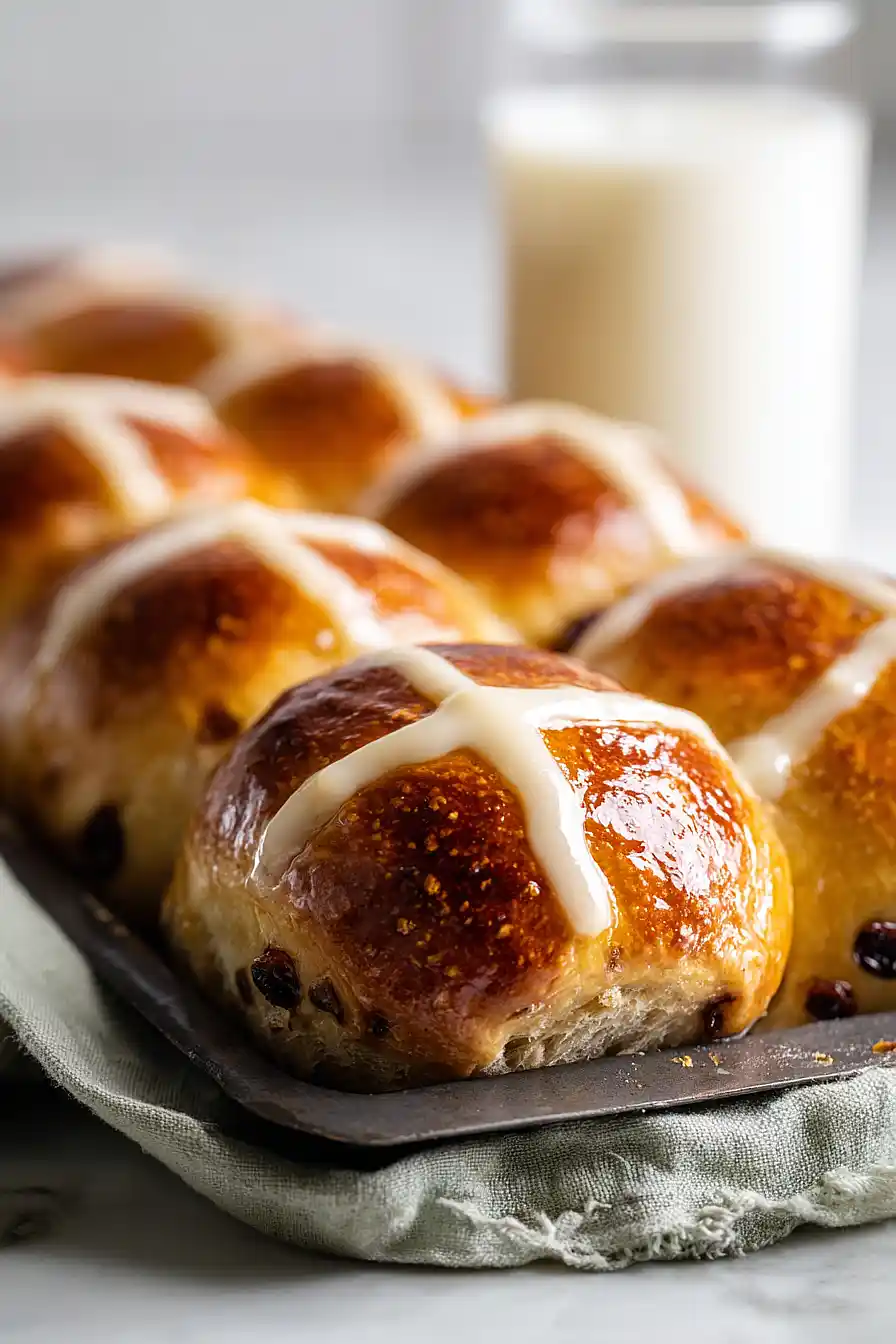
They’re brushed with apricot jam for a glossy finish and topped with a smooth cream cheese icing that melts into each cross. The sourdough adds a subtle depth of flavor that you just don’t get from store-bought versions.
They’re perfect for a holiday breakfast or brunch, and they fill your kitchen with the most wonderful smell while they bake.
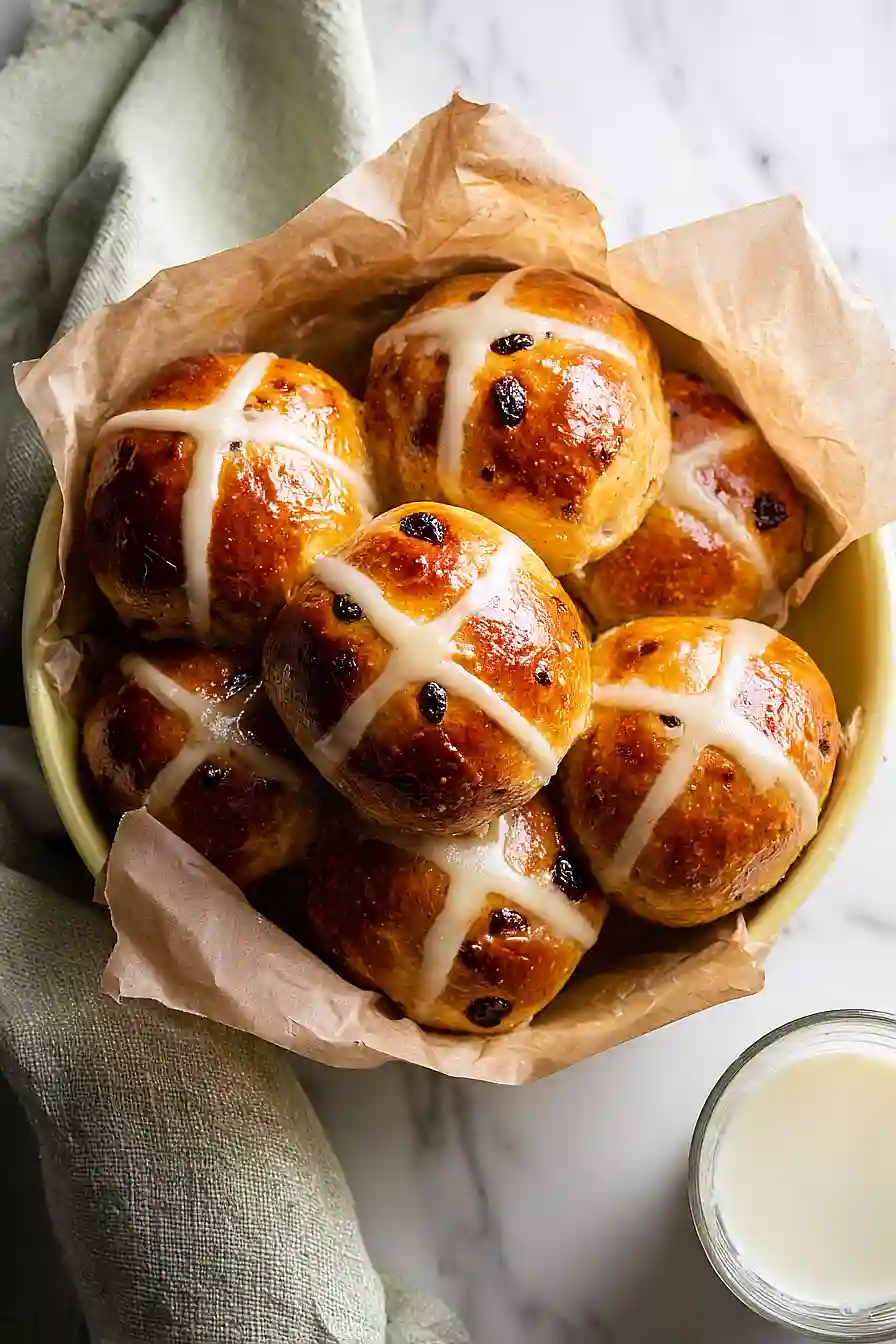
Why You’ll Love These Sourdough Hot Cross Buns
- Sourdough twist on a classic – Using sourdough starter instead of commercial yeast gives these traditional Easter buns a deeper, more complex flavor that you just can’t get from regular recipes.
- Perfect for special occasions – These buns are ideal for Easter brunch or any holiday gathering where you want to impress your family and friends with something homemade and memorable.
- Warm spices and sweet raisins – The combination of cinnamon, pumpkin pie spice, and plump raisins creates a cozy, aromatic treat that fills your kitchen with the most amazing smell.
- Make-ahead friendly – The long fermentation time means you can start these the day before and have fresh, warm buns ready for breakfast without the morning rush.
- Cream cheese frosting cross – Instead of the traditional flour paste, these buns get topped with a sweet cream cheese frosting that adds extra richness and flavor.
What Kind of Sourdough Starter Should I Use?
Any active sourdough starter will work great for these hot cross buns, whether it’s a white flour starter, whole wheat, or even rye. The most important thing is making sure your starter is fed and bubbly before you use it – you want it at its peak activity, which is usually 4-8 hours after feeding depending on your kitchen temperature. If you keep your starter in the fridge, just remember to take it out the night before and give it a feeding so it’s nice and active when you’re ready to bake. Don’t worry too much about the exact flavor profile of your starter since the spices and fruit in this recipe will be the dominant flavors anyway.
Options for Substitutions
While some ingredients are pretty essential here, there’s still room to make a few swaps based on what you have:
- Bread flour: This one’s important – bread flour gives these buns their signature chewy texture. All-purpose flour will work in a pinch, but your buns might be slightly less fluffy and won’t have quite the same structure.
- Sourdough starter: The sourdough starter is what makes these buns special, so I wouldn’t substitute it. If you don’t have an active starter, you’ll need to use a traditional yeast-based hot cross bun recipe instead.
- Raisins: Not a fan of raisins? Try dried currants, chopped dried apricots, cranberries, or even chocolate chips for a fun twist. You can also mix different dried fruits together.
- Pumpkin pie spice: If you don’t have pumpkin pie spice, make your own by mixing ½ teaspoon each of nutmeg and ginger, or just add an extra teaspoon of cinnamon.
- Apricot jam: Any smooth jam works for the glaze – try peach, orange marmalade, or even honey thinned with a bit of water.
- Half-n-half: You can use regular milk, heavy cream, or even a mix of milk and a splash of cream to get the right consistency for your icing.
Watch Out for These Mistakes While Baking
The biggest mistake with sourdough hot cross buns is rushing the rise times – since you’re using sourdough starter instead of commercial yeast, the dough needs those full 12-18 hours for the first rise and 2-3 hours for the second to develop proper flavor and texture.
Another common error is adding the raisins too early, which can tear the dough during mixing, so make sure to wait until after that initial 30-minute rest to fold them in gently.
Starting your oven at 400°F and then dropping to 350°F might seem odd, but skipping this step can result in pale, underbaked buns – that initial blast of heat helps them rise quickly and develop a golden crust.
Finally, don’t pipe your icing crosses while the buns are still warm, as the heat will cause the icing to melt and run off, leaving you with a messy blob instead of those classic crosses.
What to Serve With Hot Cross Buns?
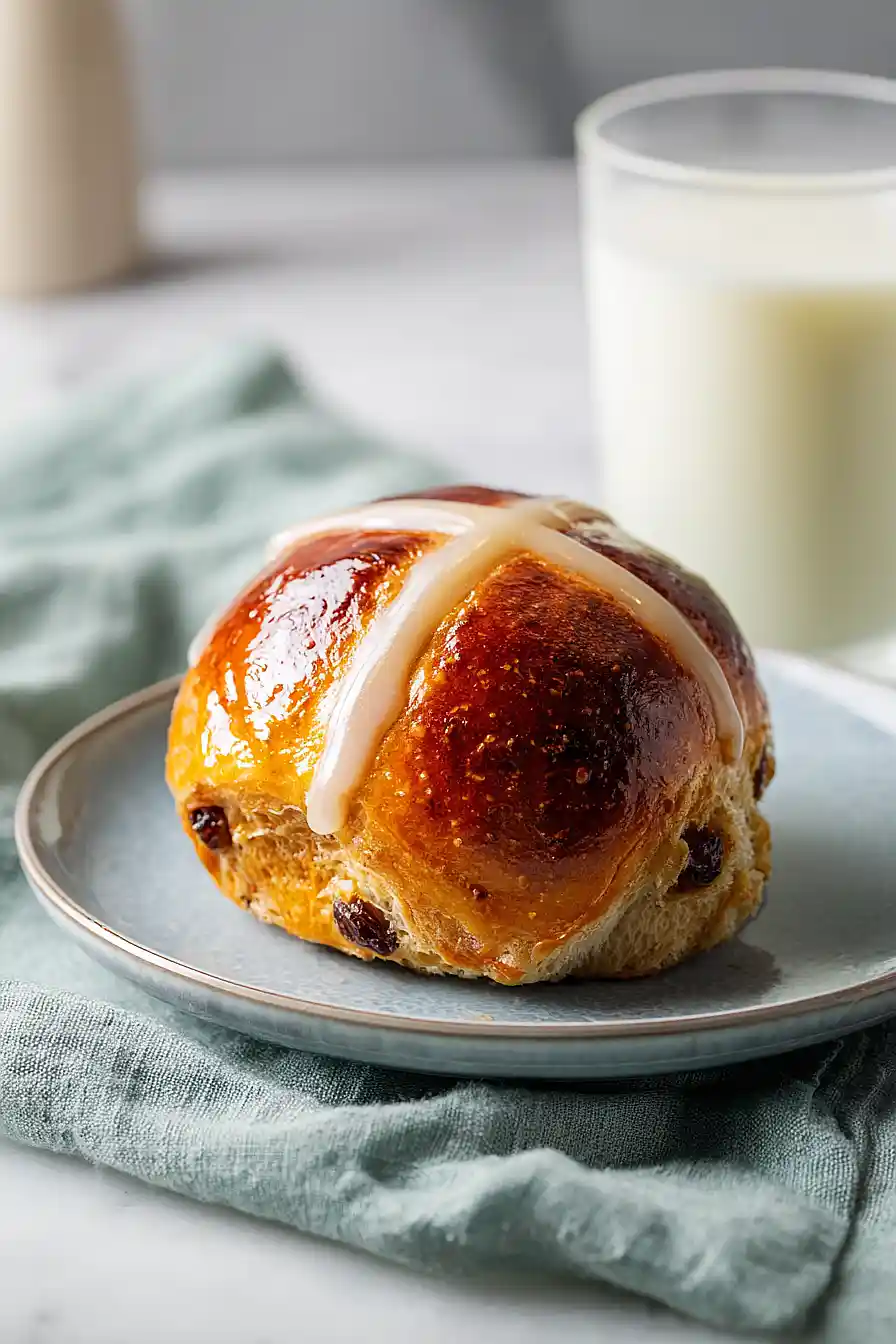
Hot cross buns are perfect for Easter brunch or a cozy weekend breakfast, and they’re honestly delicious enough to eat on their own with a cup of coffee or tea. If you want to make them extra special, serve them warm with a pat of salted butter that melts right into all those soft, spiced layers. They also pair beautifully with fresh fruit like strawberries or orange slices, which add a nice brightness that complements the cinnamon and raisins. For a full brunch spread, set them out alongside scrambled eggs, crispy bacon, and maybe some Greek yogurt with honey for a mix of sweet and savory options.
Storage Instructions
Store: Keep your hot cross buns in an airtight container at room temperature for up to 3 days. They’ll stay soft and delicious, though the crosses might soften a bit over time. If you want to keep them longer, pop them in the fridge for up to a week.
Freeze: These buns freeze really well! Wrap them individually in plastic wrap, then place in a freezer bag for up to 3 months. You can freeze them before or after adding the icing crosses, though I usually wait to add the icing until after thawing.
Warm Up: To bring your buns back to life, just warm them in a 300°F oven for about 5-10 minutes, or slice and toast them. If frozen, let them thaw at room temperature for an hour or two first. A little butter on a warm bun is absolutely perfect!
| Preparation Time | 20-30 minutes |
| Cooking Time | 30-35 minutes |
| Total Time | 18-24 hours |
| Level of Difficulty | Hard |
| Servings | 12 buns |
Estimated Nutrition
Estimated nutrition for the whole recipe (without optional ingredients):
- Calories: 3500-3900
- Protein: 60-70 g
- Fat: 130-150 g
- Carbohydrates: 510-570 g
Ingredients
For the dough:
- 1 1/4 cups milk (lukewarm, about 100°F–110°F)
- 4 cups bread flour (I always use King Arthur for a better rise)
- 1/3 cup sugar
- 2 1/4 tsp salt
- 4 oz unsalted butter (softened to room temperature)
- 3.5 oz sourdough starter (active and bubbly)
- 1 egg
For the fruit and spice mix:
- 3 oz raisins (soaked in warm water for 10 minutes then drained)
- 2 1/2 tsp vanilla extract
- 1 1/2 tsp cinnamon
- 1 tsp pumpkin pie spice
For the glaze:
- 2 tbsp apricot jam (I prefer Bonne Maman for a smoother finish)
- 1 tbsp water
For the icing:
- 2 oz cream cheese
- 1 oz unsalted butter
- 1 cup powdered sugar (sifted to remove lumps)
- 1 oz half-n-half
Step 1: Prepare Mise en Place and Soak Raisins
- 3 oz raisins
- 1 1/4 cups milk
- 4 cups bread flour
- 1/3 cup sugar
- 2 1/4 tsp salt
- 1 1/2 tsp cinnamon
- 1 tsp pumpkin pie spice
Place the raisins in a small bowl and cover with warm water, letting them soak for 10 minutes to plump up while you gather and measure all other ingredients.
Bring the milk to a lukewarm temperature (around 100°F–110°F) by gently heating it, then set it aside.
Measure out all dry ingredients (flour, sugar, salt, cinnamon, and pumpkin pie spice) and have your softened butter, active sourdough starter, egg, and vanilla extract ready at room temperature.
This prep work ensures everything moves smoothly once you begin mixing.
Step 2: Mix Dough Base and Initial Autolyse
- 4 cups bread flour
- 1/3 cup sugar
- 2 1/4 tsp salt
- 4 oz unsalted butter
- 1 1/4 cups milk
- 3.5 oz sourdough starter
- 1 egg
Combine the flour, sugar, and salt in a large mixing bowl and whisk together to evenly distribute the salt, which will help strengthen the gluten network.
Add the softened butter and mix with your hands or a wooden spoon until the mixture resembles coarse breadcrumbs.
Pour in the lukewarm milk, sourdough starter, and egg, then mix for about 1 minute until all the flour is hydrated and a shaggy dough ball forms.
Cover the bowl with a damp towel and let rest for 30 minutes at room temperature—this autolyse period allows the flour to fully absorb water and develop gluten without additional mixing.
Step 3: Develop Dough with Spices and Raisins
- 3 oz raisins
- 2 1/2 tsp vanilla extract
- 1 1/2 tsp cinnamon
- 1 tsp pumpkin pie spice
- dough base from Step 2
Drain the soaked raisins thoroughly and toss them with the vanilla extract in a small bowl.
After the 30-minute rest, add the raisin mixture along with the cinnamon and pumpkin pie spice to the dough.
Using a stand mixer fitted with a dough hook, mix on medium speed for 8 minutes, which fully develops the gluten and ensures the spices and raisins are evenly distributed throughout.
I always use King Arthur flour because it develops a superior gluten structure that gives these buns their characteristic light, airy crumb.
Step 4: Cold Ferment for Flavor Development
- developed dough from Step 3
Transfer the dough from Step 3 to a clean bowl, cover tightly with plastic wrap or a damp towel, and let it rise in a cool environment (around 68°F) for 12–18 hours.
This long, cold fermentation develops deep sourdough flavor and makes the dough easier to shape.
If your kitchen is warmer, aim for the shorter timeframe; if cooler, use the longer timeframe.
The dough should roughly double in size and have a pleasant sour aroma when ready.
Step 5: Shape Buns and Second Rise
- fermented dough from Step 4
- 1 oz unsalted butter
Grease a 9×13 inch baking pan (or similar) lightly with butter.
Turn the fermented dough onto a lightly floured surface and divide it into 12 equal pieces using a bench scraper or knife.
Shape each piece into a tight ball by gently pulling the dough toward you and rotating it, creating surface tension that helps the buns rise evenly.
Arrange the shaped buns in the greased pan in a 3×4 grid, cover loosely with a damp towel or plastic wrap, and let them rise at room temperature for 2–3 hours until they’ve roughly doubled in size and are touching each other slightly.
They should feel puffy but still have a slight spring when gently pressed.
Step 6: Bake Buns with Oven Temperature Adjustment
- shaped and risen buns from Step 5
Preheat your oven to 400°F about 15 minutes before the buns finish their second rise.
Once the buns have risen properly, place the pan in the hot oven, then immediately reduce the temperature to 350°F.
This technique gives the buns an initial burst of oven spring before the heat moderates, resulting in a beautiful golden crust.
Bake for 28–30 minutes until the tops are deep golden brown and the buns sound hollow when tapped on the bottom.
Step 7: Glaze with Jam and Top with Icing
- 2 tbsp apricot jam
- 1 tbsp water
- 2 oz cream cheese
- 1 oz unsalted butter
- 1 cup powdered sugar
- 1 oz half-n-half
While the buns bake, warm the apricot jam with 1 tablespoon of water in a small saucepan over low heat, stirring until smooth—I prefer Bonne Maman jam because it has a smoother, less chunky texture that pipes beautifully.
As soon as the buns come out of the oven, brush them generously with the warm jam glaze while they’re still hot, which helps it set into a glossy finish.
For the icing, whip together the cream cheese, unsalted butter, sifted powdered sugar, and half-n-half in a bowl until smooth and pipeable.
Once the buns have cooled to room temperature, transfer the icing to a piping bag fitted with a small round or cross tip, and pipe a cross on top of each bun.
Serve at room temperature.
Spiced Sourdough Hot Cross Buns
Ingredients
For the dough
- 1 1/4 cups milk (lukewarm, about 100°F–110°F)
- 4 cups bread flour (I always use King Arthur for a better rise)
- 1/3 cup sugar
- 2 1/4 tsp salt
- 4 oz unsalted butter (softened to room temperature)
- 3.5 oz sourdough starter (active and bubbly)
- 1 egg
For the fruit and spice mix
- 3 oz raisins (soaked in warm water for 10 minutes then drained)
- 2 1/2 tsp vanilla extract
- 1 1/2 tsp cinnamon
- 1 tsp pumpkin pie spice
For the glaze
- 2 tbsp apricot jam (I prefer Bonne Maman for a smoother finish)
- 1 tbsp water
For the icing
- 2 oz cream cheese
- 1 oz unsalted butter
- 1 cup powdered sugar (sifted to remove lumps)
- 1 oz half-n-half
Instructions
- Place the raisins in a small bowl and cover with warm water, letting them soak for 10 minutes to plump up while you gather and measure all other ingredients. Bring the milk to a lukewarm temperature (around 100°F–110°F) by gently heating it, then set it aside. Measure out all dry ingredients (flour, sugar, salt, cinnamon, and pumpkin pie spice) and have your softened butter, active sourdough starter, egg, and vanilla extract ready at room temperature. This prep work ensures everything moves smoothly once you begin mixing.
- Combine the flour, sugar, and salt in a large mixing bowl and whisk together to evenly distribute the salt, which will help strengthen the gluten network. Add the softened butter and mix with your hands or a wooden spoon until the mixture resembles coarse breadcrumbs. Pour in the lukewarm milk, sourdough starter, and egg, then mix for about 1 minute until all the flour is hydrated and a shaggy dough ball forms. Cover the bowl with a damp towel and let rest for 30 minutes at room temperature—this autolyse period allows the flour to fully absorb water and develop gluten without additional mixing.
- Drain the soaked raisins thoroughly and toss them with the vanilla extract in a small bowl. After the 30-minute rest, add the raisin mixture along with the cinnamon and pumpkin pie spice to the dough. Using a stand mixer fitted with a dough hook, mix on medium speed for 8 minutes, which fully develops the gluten and ensures the spices and raisins are evenly distributed throughout. I always use King Arthur flour because it develops a superior gluten structure that gives these buns their characteristic light, airy crumb.
- Transfer the dough from Step 3 to a clean bowl, cover tightly with plastic wrap or a damp towel, and let it rise in a cool environment (around 68°F) for 12–18 hours. This long, cold fermentation develops deep sourdough flavor and makes the dough easier to shape. If your kitchen is warmer, aim for the shorter timeframe; if cooler, use the longer timeframe. The dough should roughly double in size and have a pleasant sour aroma when ready.
- Grease a 9x13 inch baking pan (or similar) lightly with butter. Turn the fermented dough onto a lightly floured surface and divide it into 12 equal pieces using a bench scraper or knife. Shape each piece into a tight ball by gently pulling the dough toward you and rotating it, creating surface tension that helps the buns rise evenly. Arrange the shaped buns in the greased pan in a 3x4 grid, cover loosely with a damp towel or plastic wrap, and let them rise at room temperature for 2–3 hours until they've roughly doubled in size and are touching each other slightly. They should feel puffy but still have a slight spring when gently pressed.
- Preheat your oven to 400°F about 15 minutes before the buns finish their second rise. Once the buns have risen properly, place the pan in the hot oven, then immediately reduce the temperature to 350°F. This technique gives the buns an initial burst of oven spring before the heat moderates, resulting in a beautiful golden crust. Bake for 28–30 minutes until the tops are deep golden brown and the buns sound hollow when tapped on the bottom.
- While the buns bake, warm the apricot jam with 1 tablespoon of water in a small saucepan over low heat, stirring until smooth—I prefer Bonne Maman jam because it has a smoother, less chunky texture that pipes beautifully. As soon as the buns come out of the oven, brush them generously with the warm jam glaze while they're still hot, which helps it set into a glossy finish. For the icing, whip together the cream cheese, unsalted butter, sifted powdered sugar, and half-n-half in a bowl until smooth and pipeable. Once the buns have cooled to room temperature, transfer the icing to a piping bag fitted with a small round or cross tip, and pipe a cross on top of each bun. Serve at room temperature.