If you ask me, hot cross buns are one of the best parts of spring.
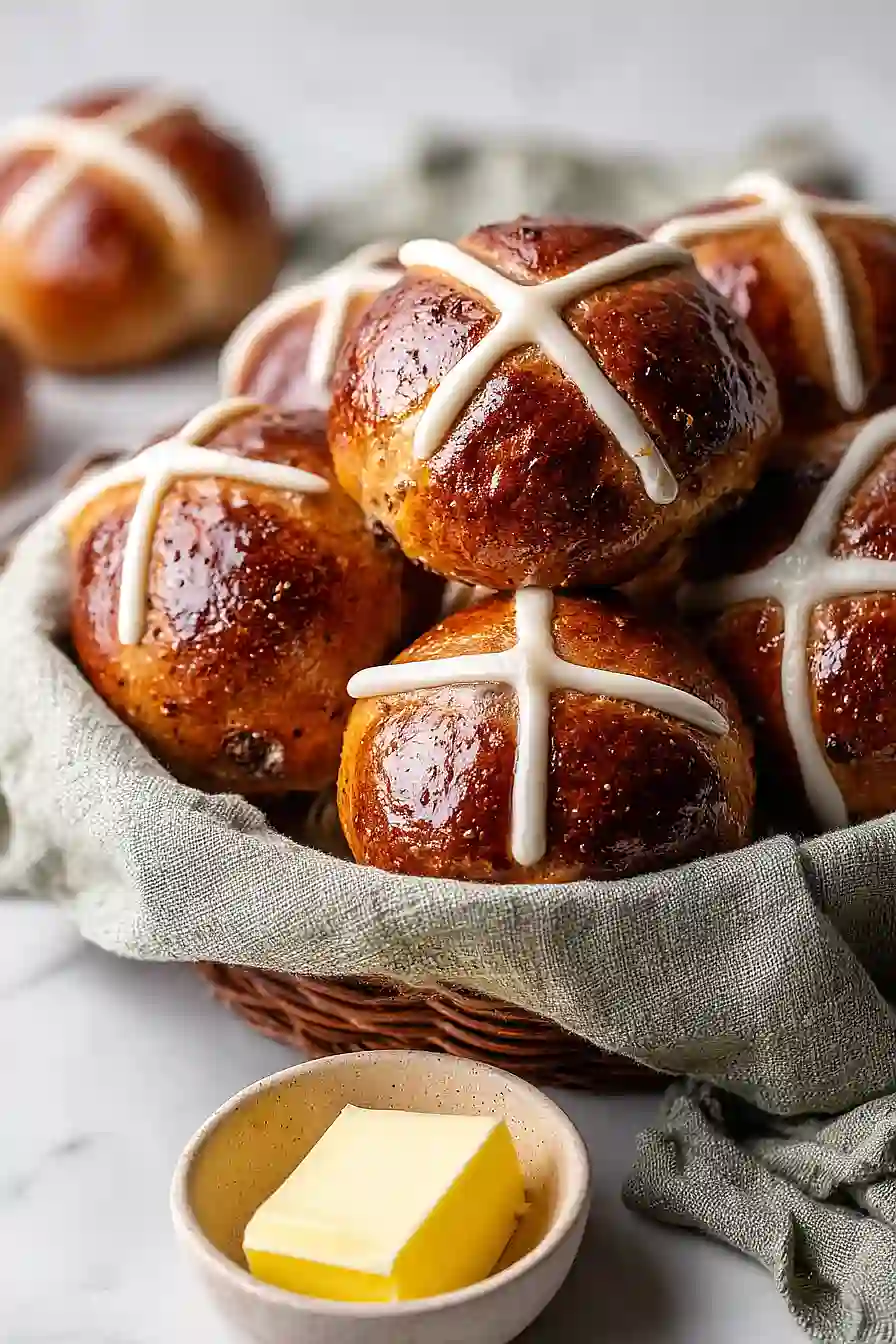
These keto-friendly buns bring all the warm spice and sweetness you want, without the carbs. Cinnamon, nutmeg, and allspice mix with orange zest for that classic flavor, while chocolate chunks add a little something extra.
The dough comes together with almond flour and flaxseed meal instead of regular flour, and a bit of yeast gives them that soft, pillowy texture. A simple icing drizzled on top finishes them off.
They’re perfect for Easter brunch or any morning when you want something special that fits your low-carb lifestyle.

Why You’ll Love These Keto Hot Cross Buns
- Keto-friendly Easter treat – You can enjoy traditional hot cross buns without the carbs or guilt, making them perfect for anyone following a low-carb or ketogenic lifestyle.
- Warm spices and flavors – The cinnamon, nutmeg, and allspice combined with orange zest give these buns that classic Easter taste you remember, just without the sugar.
- Chocolate chunks instead of raisins – A fun twist on the traditional recipe that keeps the carbs low while adding rich, satisfying chocolate in every bite.
- Special occasion baking – These buns let you celebrate holidays and special moments without breaking your diet, so you never have to feel left out at the table.
What Kind of Almond Flour Should I Use?
For keto hot cross buns, you’ll want to use blanched almond flour rather than almond meal, which makes a big difference in texture. Blanched almond flour is made from almonds with the skins removed, giving you a finer, lighter crumb that’s closer to traditional baked goods. Almond meal, on the other hand, includes the skins and tends to be coarser, which can make your buns denser and a bit grittier. I recommend sticking with a quality blanched almond flour from brands you trust – the superfine varieties work especially well for getting that soft, bread-like texture you’re after. Just make sure to store your almond flour in the fridge or freezer since it can go rancid at room temperature.
Options for Substitutions
These keto buns have some specific ingredients, but here are a few swaps you can make:
- Almond flour: You can replace almond flour with sunflower seed flour if you have a nut allergy. Just keep in mind the buns might turn slightly green due to a reaction with baking powder – it’s totally safe to eat and doesn’t affect the taste.
- Whey protein: If you don’t have whey protein, you can use egg white protein powder or collagen powder instead. The texture might be slightly different, but it’ll still work.
- Psyllium husk: This ingredient is really important for the dough structure in keto baking, so I’d recommend not substituting it. It helps bind everything together and gives the buns their texture.
- Erythritol: Feel free to use monk fruit sweetener or allulose in the same amount. If using stevia, you’ll need much less – start with about 1 teaspoon and adjust to taste.
- Chocolate chunks: Traditional hot cross buns use raisins or currants, but since those aren’t keto-friendly, you can swap the chocolate for sugar-free dried cranberries or just leave them out entirely.
- Sour cream: Greek yogurt or cream cheese (thinned with a bit of water) work as good substitutes here.
- Inulin: If you don’t have inulin, you can leave it out or replace it with an extra tablespoon of erythritol. It helps with browning and texture but isn’t essential.
Watch Out for These Mistakes While Baking
The biggest mistake with keto hot cross buns is getting the yeast mixture too hot – anything over 110°F will kill the yeast and your buns won’t rise, so use a thermometer to check the temperature before adding it to the yeast.
Since keto dough doesn’t behave like traditional wheat dough, don’t expect a dramatic rise during proofing – a slight puff is normal, and over-proofing can actually make the texture gummy, so stick to the 1.5-3 hour window.
Working with wet hands when shaping the dough is essential because psyllium husk and flaxseed meal make the mixture incredibly sticky, and trying to shape with dry hands will leave you frustrated with dough stuck everywhere.
Finally, resist the urge to skip the cooling time before piping the crosses – warm buns will melt your icing into a runny mess instead of those nice defined lines you’re looking for.
What to Serve With Keto Hot Cross Buns?
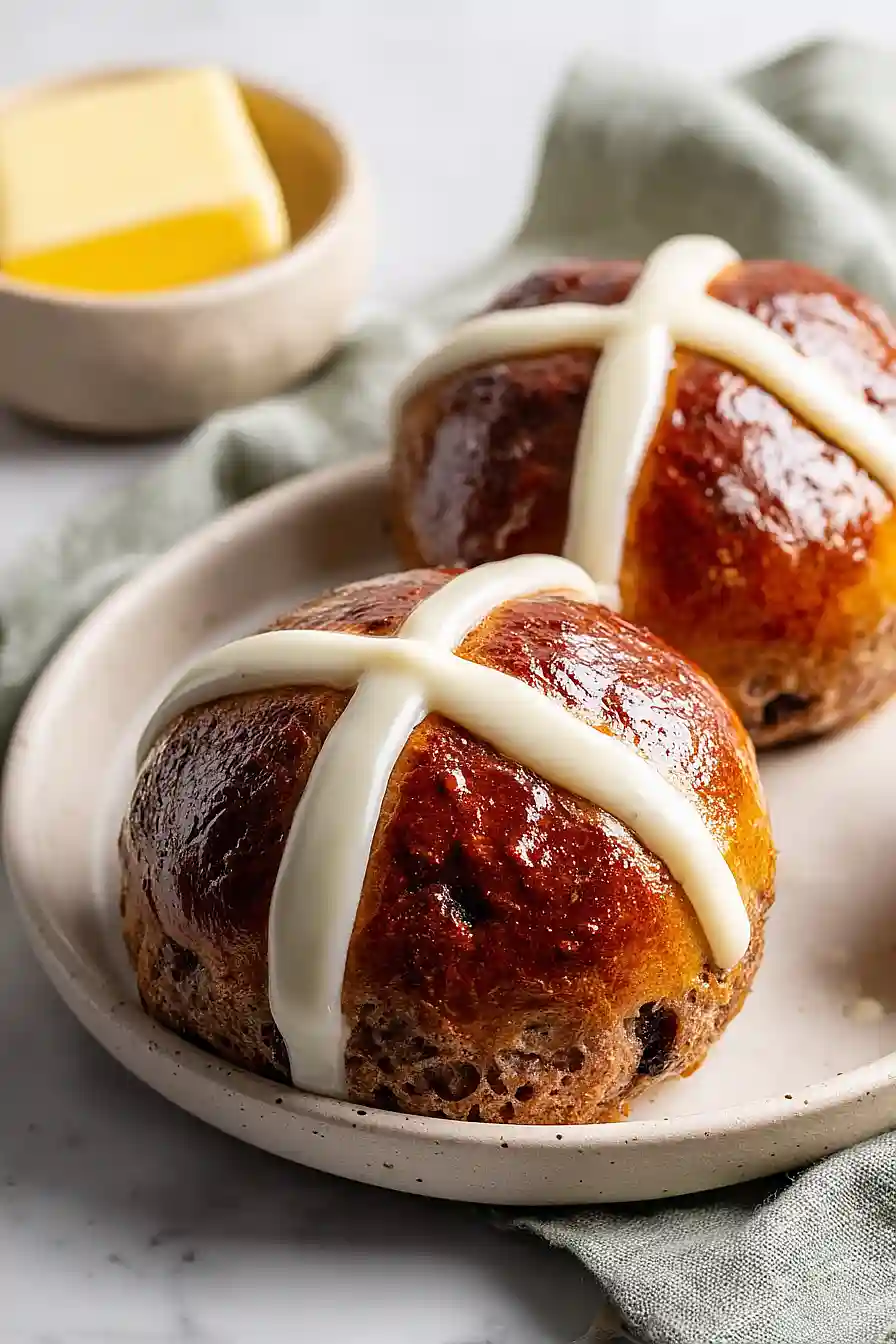
These keto hot cross buns are perfect for breakfast or brunch with a hot cup of coffee or tea – the warm spices really shine when paired with your favorite morning drink. I love spreading mine with a thick layer of butter while they’re still warm, or you can go fancy with some sugar-free jam or cream cheese. They also make a great afternoon snack on their own since they’re already studded with chocolate chunks and packed with flavor. If you’re serving them for Easter brunch, set them out alongside some scrambled eggs, bacon, and fresh berries for a complete low-carb spread that everyone will enjoy.
Storage Instructions
Store: Keep your hot cross buns in an airtight container at room temperature for up to 3 days, or in the fridge for up to a week. They’re actually great straight from the fridge if you like a denser texture, or you can bring them back to room temp before eating.
Freeze: These buns freeze really well for up to 3 months. I like to freeze them individually wrapped in plastic wrap, then put them all in a freezer bag so I can grab just one or two whenever I want. You can freeze them with or without the icing on top.
Warm Up: To bring your buns back to life, just pop them in the microwave for about 20-30 seconds, or warm them in a 300°F oven for 5-10 minutes. If they’re frozen, let them thaw at room temperature first, then warm them up. The butter makes them taste freshly baked again!
| Preparation Time | 40-60 minutes |
| Cooking Time | 25-30 minutes |
| Total Time | 240-300 minutes |
| Level of Difficulty | Medium |
| Servings | 8 buns |
Estimated Nutrition
Estimated nutrition for the whole recipe (without optional ingredients):
- Calories: 1900-2100
- Protein: 65-75 g
- Fat: 145-160 g
- Carbohydrates: 85-100 g
Ingredients
For the yeast mixture:
- 1.5 tbsp dry yeast
- 1 pinch ginger
- 1.5 tbsp inulin
- 1/2 cup water (warmed to 105-110°F to properly bloom the yeast)
- 2.5 oz sour cream
For the dough:
- 6.5 oz almond flour (I always use King Arthur super-fine flour for a less gritty texture)
- 3.5 oz flaxseed meal
- 1.5 oz whey protein
- 0.7 oz psyllium husk (finely ground powder is best for dough elasticity)
- 1/3 cup erythritol
- 2.5 tsp xanthan gum
- 2 tsp baking powder
- 1 tsp salt
- 1.25 tsp cinnamon
- 1/2 tsp nutmeg
- 1/2 tsp allspice
- 3 eggs (room temperature to prevent the butter from seizing)
- 1 tbsp apple cider vinegar
- 2 tbsp orange zest
- 2.5 oz butter (I like Kerrygold unsalted butter for this)
- 1/2 cup chocolate chunks
For the icing:
- 1/2 cup powdered erythritol (sifted to remove lumps for a smooth finish)
- 1/2 tsp vanilla essence
- 1 pinch salt
- 3 tsp water
Step 1: Prepare Mise en Place and Activate the Yeast
- 1.5 tbsp dry yeast
- 1 pinch ginger
- 1.5 tbsp inulin
- 1/2 cup water
- 2.5 oz sour cream
Gather all ingredients and ensure eggs are at room temperature—this prevents the butter from seizing when mixed in later.
Measure the yeast and ginger into a small bowl.
In a separate bowl, combine the warmed water (105-110°F is critical for proper yeast activation), inulin, and sour cream.
Pour the liquid mixture over the yeast and ginger, then let it rest undisturbed for 7 minutes until it becomes bubbly and fragrant.
This blooming step confirms the yeast is alive and active before committing all other ingredients.
Step 2: Mix Dry Ingredients and Prepare Wet Mixture
- 6.5 oz almond flour
- 3.5 oz flaxseed meal
- 1.5 oz whey protein
- 1/3 cup erythritol
- 2.5 tsp xanthan gum
- 2 tsp baking powder
- 1 tsp salt
- 1.25 tsp cinnamon
- 1/2 tsp nutmeg
- 1/2 tsp allspice
- 3 eggs
- 1 tbsp apple cider vinegar
- 2 tbsp orange zest
While the yeast blooms, whisk together all dry ingredients in a large bowl: almond flour, flaxseed meal, whey protein, erythritol, xanthan gum, baking powder, salt, cinnamon, nutmeg, and allspice.
This ensures even distribution of leavening agents and spices throughout the dough.
In the bloomed yeast mixture, whisk in the room-temperature eggs, apple cider vinegar, and orange zest until well combined.
I like to add the vinegar as it helps activate the baking powder and brighten the flavor of these buns.
Step 3: Combine Wet and Dry Mixtures to Form Dough
- dry ingredient mixture from Step 2
- wet ingredient mixture from Step 2
- 2.5 oz butter
- 0.7 oz psyllium husk
- 1/2 cup chocolate chunks
Pour the wet ingredient mixture from Step 2 into the bowl of dry ingredients.
Add the softened butter cut into small pieces.
Using a wooden spoon or stand mixer, blend everything together for about 1 minute until you reach a smooth, cohesive dough with no dry streaks.
The xanthan gum and psyllium husk will give this dough its structure since traditional gluten isn’t available.
Fold in the chocolate chunks at the end so they’re distributed evenly throughout.
Step 4: Shape and Rise the Buns
- dough from Step 3
Lightly wet your hands with water to prevent sticking, then shape the dough into 8 equal balls.
This keto dough is quite sticky, so working quickly and keeping your hands damp is essential.
Place the balls on a parchment-lined baking tray, leaving space between them for expansion.
Cover loosely with plastic wrap or a damp towel and place in a warm spot (like a turned-off oven with the light on, or near a sunny window) for 1.5 to 3 hours.
The dough should roughly double in size and feel airy when gently poked—don’t expect the same rise as traditional bread since we’re using alternative flours.
Step 5: Bake the Buns in Two Temperature Stages
- risen buns from Step 4
About 20 minutes before the buns finish rising, preheat your oven to 375°F.
Once the buns are fully risen, brush the tops lightly with egg wash (one beaten egg mixed with a splash of water).
Bake at 375°F for exactly 10 minutes to set the structure and create a light crust.
Then reduce the oven temperature to 350°F and continue baking for 15-20 minutes more, until the buns are deep golden brown and a skewer inserted into the center comes out clean.
The two-stage baking prevents the tops from browning too quickly while the centers finish cooking.
Step 6: Cool and Prepare Icing
- 1/2 cup powdered erythritol
- 1/2 tsp vanilla essence
- 1 pinch salt
- 3 tsp water
Remove the buns from the oven and let them cool on the baking tray for 20 minutes (this allows carryover cooking and prevents them from being too fragile to move).
While they cool, whisk together the powdered erythritol (sifted to remove any lumps for smoothness), vanilla essence, salt, and water in a small bowl until you reach a thick, pipeable paste.
The consistency should be similar to thick toothpaste—thick enough to hold its shape when piped but thin enough to flow smoothly from a piping bag.
Step 7: Transfer to Cooling Rack and Pipe Crosses
- cooled buns from Step 6
- icing from Step 6
Once the buns are cool enough to handle, carefully transfer them to a wire cooling rack.
Let them cool completely to room temperature, about 10-15 minutes longer.
Transfer the icing to a piping bag fitted with a small round tip and pipe a cross on the top of each bun in two intersecting lines.
I find that waiting until the buns are completely cool prevents the icing from melting and sliding off.
Allow the icing to set for 5 minutes before serving.

Keto Hot Cross Buns
Ingredients
For the yeast mixture::
- 1.5 tbsp dry yeast
- 1 pinch ginger
- 1.5 tbsp inulin
- 1/2 cup water (warmed to 105-110°F to properly bloom the yeast)
- 2.5 oz sour cream
For the dough::
- 6.5 oz almond flour (I always use King Arthur super-fine flour for a less gritty texture)
- 3.5 oz flaxseed meal
- 1.5 oz whey protein
- 0.7 oz psyllium husk (finely ground powder is best for dough elasticity)
- 1/3 cup erythritol
- 2.5 tsp xanthan gum
- 2 tsp baking powder
- 1 tsp salt
- 1.25 tsp cinnamon
- 1/2 tsp nutmeg
- 1/2 tsp allspice
- 3 eggs (room temperature to prevent the butter from seizing)
- 1 tbsp apple cider vinegar
- 2 tbsp orange zest
- 2.5 oz butter (I like Kerrygold unsalted butter for this)
- 1/2 cup chocolate chunks
For the icing::
- 1/2 cup powdered erythritol (sifted to remove lumps for a smooth finish)
- 1/2 tsp vanilla essence
- 1 pinch salt
- 3 tsp water
Instructions
- Gather all ingredients and ensure eggs are at room temperature—this prevents the butter from seizing when mixed in later. Measure the yeast and ginger into a small bowl. In a separate bowl, combine the warmed water (105-110°F is critical for proper yeast activation), inulin, and sour cream. Pour the liquid mixture over the yeast and ginger, then let it rest undisturbed for 7 minutes until it becomes bubbly and fragrant. This blooming step confirms the yeast is alive and active before committing all other ingredients.
- While the yeast blooms, whisk together all dry ingredients in a large bowl: almond flour, flaxseed meal, whey protein, erythritol, xanthan gum, baking powder, salt, cinnamon, nutmeg, and allspice. This ensures even distribution of leavening agents and spices throughout the dough. In the bloomed yeast mixture, whisk in the room-temperature eggs, apple cider vinegar, and orange zest until well combined. I like to add the vinegar as it helps activate the baking powder and brighten the flavor of these buns.
- Pour the wet ingredient mixture from Step 2 into the bowl of dry ingredients. Add the softened butter cut into small pieces. Using a wooden spoon or stand mixer, blend everything together for about 1 minute until you reach a smooth, cohesive dough with no dry streaks. The xanthan gum and psyllium husk will give this dough its structure since traditional gluten isn't available. Fold in the chocolate chunks at the end so they're distributed evenly throughout.
- Lightly wet your hands with water to prevent sticking, then shape the dough into 8 equal balls. This keto dough is quite sticky, so working quickly and keeping your hands damp is essential. Place the balls on a parchment-lined baking tray, leaving space between them for expansion. Cover loosely with plastic wrap or a damp towel and place in a warm spot (like a turned-off oven with the light on, or near a sunny window) for 1.5 to 3 hours. The dough should roughly double in size and feel airy when gently poked—don't expect the same rise as traditional bread since we're using alternative flours.
- About 20 minutes before the buns finish rising, preheat your oven to 375°F. Once the buns are fully risen, brush the tops lightly with egg wash (one beaten egg mixed with a splash of water). Bake at 375°F for exactly 10 minutes to set the structure and create a light crust. Then reduce the oven temperature to 350°F and continue baking for 15-20 minutes more, until the buns are deep golden brown and a skewer inserted into the center comes out clean. The two-stage baking prevents the tops from browning too quickly while the centers finish cooking.
- Remove the buns from the oven and let them cool on the baking tray for 20 minutes (this allows carryover cooking and prevents them from being too fragile to move). While they cool, whisk together the powdered erythritol (sifted to remove any lumps for smoothness), vanilla essence, salt, and water in a small bowl until you reach a thick, pipeable paste. The consistency should be similar to thick toothpaste—thick enough to hold its shape when piped but thin enough to flow smoothly from a piping bag.
- Once the buns are cool enough to handle, carefully transfer them to a wire cooling rack. Let them cool completely to room temperature, about 10-15 minutes longer. Transfer the icing to a piping bag fitted with a small round tip and pipe a cross on the top of each bun in two intersecting lines. I find that waiting until the buns are completely cool prevents the icing from melting and sliding off. Allow the icing to set for 5 minutes before serving.