I never thought I’d be the person to put salmon under a cheesy, crispy topping and bake it until it’s all bubbly and golden. Growing up, salmon was always grilled or pan-seared—that’s just how we did it. But then I discovered gratins aren’t just for potatoes.
Turns out, salmon and asparagus are actually perfect for this kind of treatment. The creamy sauce keeps the fish from drying out, and that crunchy panko-parmesan topping adds texture that makes every bite interesting. Plus, it’s all done in one dish, which means less cleanup. Sometimes the best recipes are the ones that break your own rules.
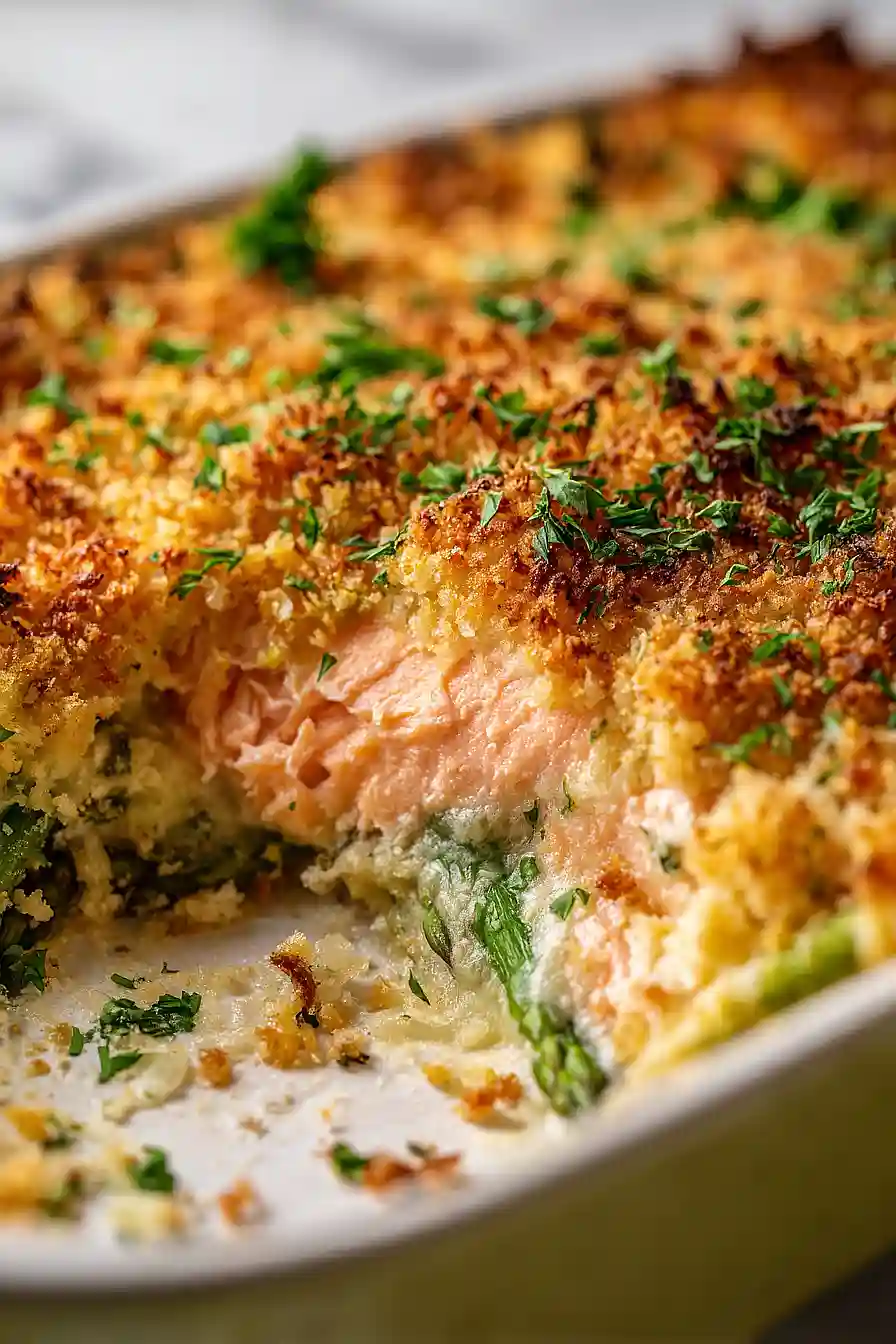
Why You’ll Love This Salmon and Asparagus Gratin
- Restaurant-quality meal at home – The creamy cheese sauce and crispy panko topping make this dish feel fancy enough for guests, but it’s easy enough for a regular weeknight.
- Ready in under an hour – From start to finish, you’ll have this impressive dinner on the table in 35-50 minutes.
- Healthy and satisfying – Packed with protein from the salmon and nutrients from the asparagus, this gratin gives you a balanced meal in one dish.
- Simple ingredients – You probably have most of these staples in your kitchen already, making it an easy choice when you’re planning meals for the week.
What Kind of Salmon Should I Use?
You can choose farm-raised or wild for this recipe, both will work great in a gratin. If all you have access to is frozen salmon, don’t worry – it’ll turn out just fine. Most fresh salmon at the supermarket has actually been previously frozen right off the boat anyway. For this gratin, you’ll want to use skinless salmon fillets since the skin won’t get crispy when baked in a creamy sauce, and it’s easier to serve without it. Look for fillets that are about the same thickness so they cook evenly, and feel free to cut them into smaller portions if that makes serving easier.
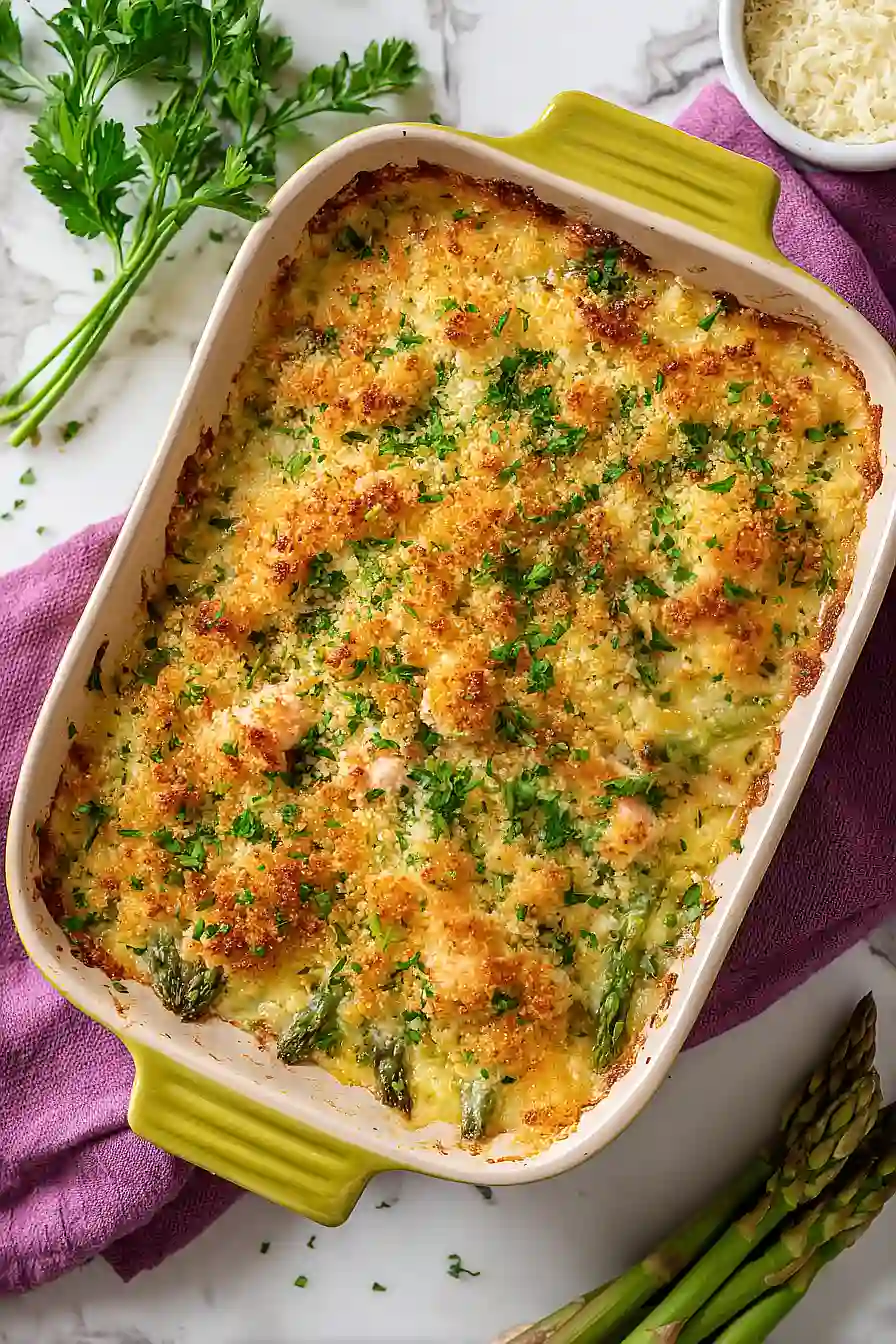
Options for Substitutions
This gratin is pretty forgiving when it comes to swapping ingredients:
- Salmon fillets: You can use other firm fish like cod, halibut, or even trout. Just keep the cooking time similar since these fish have comparable textures.
- Asparagus: Green beans or broccoli florets make great substitutes. If using broccoli, blanch it for 2-3 minutes first so it cooks evenly with the fish.
- Cheddar cheese: Gruyere, Swiss, or fontina work really well in gratins. You could also use mozzarella for a milder flavor, though it won’t be quite as sharp.
- Panko: Regular breadcrumbs work fine here. If you want extra crunch, crush some crackers or even cornflakes as a topping.
- Cream: You can use all milk instead of cream for a lighter version, or try half-and-half as a middle ground. The sauce will be slightly thinner but still tasty.
- Shallots: Regular yellow or white onions are a good swap. Use about the same amount, though onions have a slightly stronger flavor than shallots.
Watch Out for These Mistakes While Cooking
The biggest mistake when making salmon gratin is overcooking the fish, which turns it dry and chalky – since salmon continues cooking after you remove it from the oven, take the dish out when the fish is still slightly translucent in the center and let it rest for a few minutes to reach perfect doneness. Another common error is adding the asparagus tips at the same time as the stems, but tips cook much faster and will turn mushy if you don’t add them later in the process. Make sure your sauce thickens properly before adding the cheese by whisking constantly after you add the flour – lumpy sauce happens when you rush this step or don’t stir enough. For an extra crispy topping, try broiling the casserole for the last 2-3 minutes of cooking, but watch it closely since breadcrumbs can go from golden to burned in seconds.
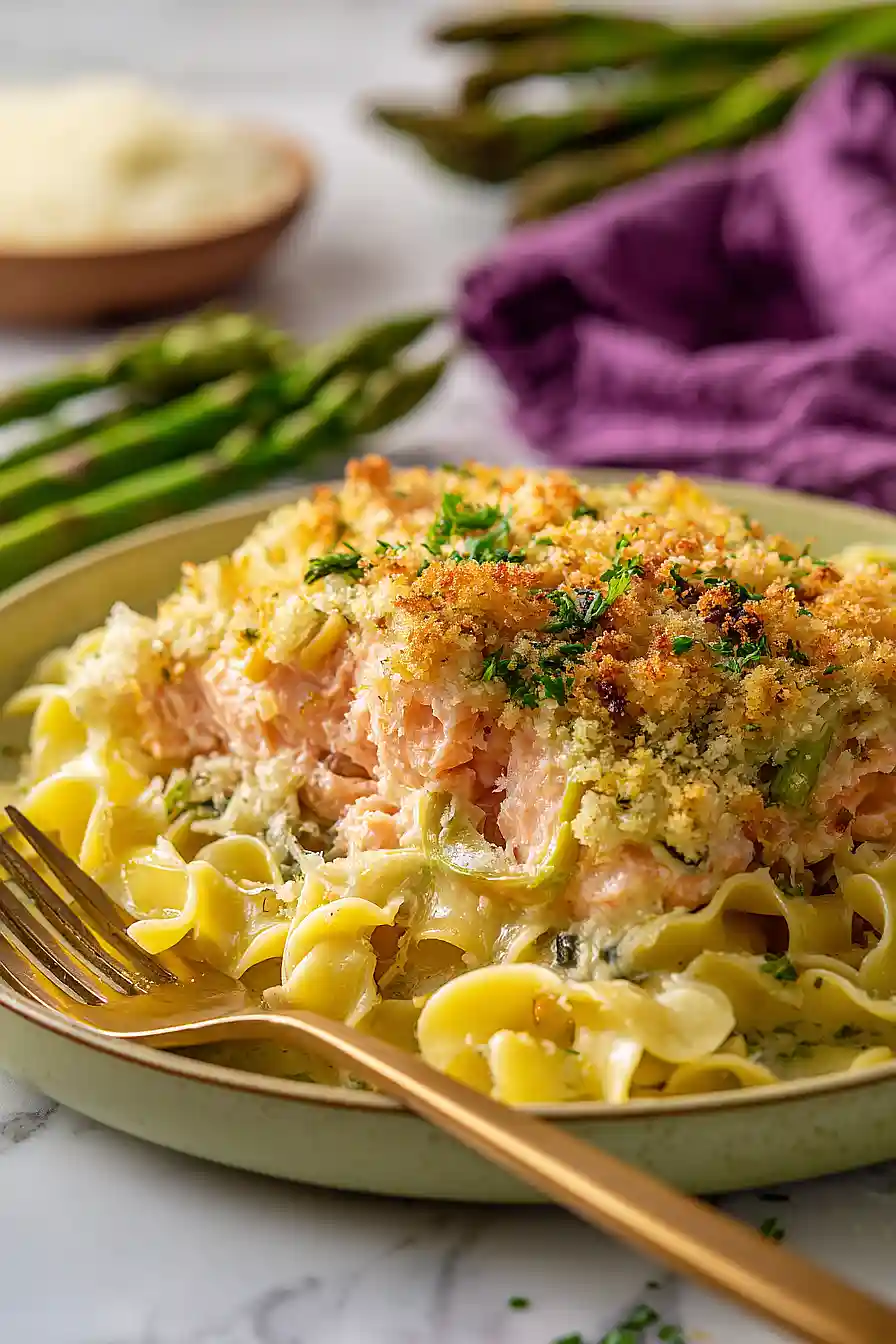
What to Serve With Salmon and Asparagus Gratin?
This gratin is pretty rich and filling on its own, so I like to keep the sides simple and fresh. A crisp green salad with a light lemon vinaigrette cuts through the creaminess perfectly and adds a nice contrast to the dish. You could also serve it with some crusty bread or dinner rolls to soak up the cheesy sauce, or go with roasted baby potatoes if you want something more substantial. For a complete meal, steamed green beans or a simple arugula salad with cherry tomatoes works great too.
Storage Instructions
Store: Keep any leftover gratin in an airtight container in the fridge for up to 3 days. The creamy sauce might separate a little, but it’ll still taste great. I like to cover it tightly with foil or plastic wrap to keep it from drying out.
Freeze: This gratin doesn’t freeze as well as some other dishes since the cream sauce can get a bit grainy and the asparagus can become mushy when thawed. If you really need to freeze it, it’ll keep for about a month, but the texture won’t be quite the same as fresh.
Reheat: Warm it up in the oven at 350°F covered with foil for about 15-20 minutes until heated through. You can also use the microwave, but the topping won’t be as crispy. Add a splash of milk if the sauce seems too thick after reheating.
| Preparation Time | 20-30 minutes |
| Cooking Time | 15-20 minutes |
| Total Time | 35-50 minutes |
| Level of Difficulty | Medium |
| Servings | 4 servings |
Estimated Nutrition
Estimated nutrition for the whole recipe (without optional ingredients):
- Calories: 2000-2200
- Protein: 130-145 g
- Fat: 135-150 g
- Carbohydrates: 85-100 g
Ingredients
For the filling:
- 1.25 lbs salmon fillets (cut into 1-inch chunks)
- 8 oz asparagus (trimmed and cut into 2-inch pieces)
- 1 cup cheddar cheese (I prefer Cabot Seriously Sharp for better melting)
- 1/2 cup milk
- 3/4 cup cream
- 3 tbsp flour
- 1 cup shallots (finely sliced for a milder onion flavor)
- 1 oz butter (I like Kerrygold unsalted butter for this)
- 2 tbsp olive oil
- salt
- Pinch of ground nutmeg
For the topping:
- 1/2 cup panko (gives a much lighter, crunchier texture than breadcrumbs)
- 1/2 cup parmesan cheese
- 2.5 tbsp parsley
- 1.5 tbsp butter (melted and cooled to room temperature)
Step 1: Prepare Mise en Place and Preheat Oven
- 1.25 lbs salmon fillets
- 8 oz asparagus
- 1 cup shallots
Preheat your oven to 400°F (200°C).
While it heats, prepare all ingredients: trim the asparagus and cut into 2-inch pieces, keeping the tips separate from the thicker stems—this separation matters because stems need more cooking time.
Cut the salmon into 1-inch chunks and refrigerate until ready to use.
Finely slice the shallots and measure out your milk, cream, flour, and cheese.
This prep work ensures smooth cooking once you begin.
Step 2: Make the Topping Mixture
- 1/2 cup panko
- 1/2 cup parmesan cheese
- 2.5 tbsp parsley
- 1.5 tbsp butter
In a small bowl, combine the panko, grated parmesan cheese, and chopped parsley.
Drizzle the melted butter over this mixture and toss with a fork until the panko is evenly coated and slightly damp—this helps it brown beautifully in the oven.
Set aside until ready to top the gratin.
Step 3: Build the Cream Sauce Base
- 1 oz butter
- 2 tbsp olive oil
- 1 cup shallots
- asparagus stems from Step 1
- 3 tbsp flour
- 1/2 cup milk
- 3/4 cup cream
- Pinch of ground nutmeg
Heat the 1 oz butter and olive oil together in a large skillet or saucepan over medium heat.
Once the butter foams, add the sliced shallots and sauté for 3 minutes until softened and fragrant.
Add the asparagus stems and cook for 2-3 minutes to start softening them.
Sprinkle the flour over everything and stir constantly for 1 minute to create a roux base—this prevents lumps in your sauce.
Gradually pour in the milk and cream while stirring continuously until the mixture thickens, about 2-3 minutes.
I like to add a pinch of ground nutmeg at this point because it subtly enhances the cream without overpowering the salmon and asparagus.
Step 4: Finish the Sauce and Combine Components
- 1 cup cheddar cheese
- salt
- asparagus tips from Step 1
- salmon from Step 1
- cream sauce mixture from Step 3
Remove the skillet from heat and stir in the shredded cheddar cheese until completely melted and smooth.
Season with salt to taste.
Gently fold in the asparagus tips (which only need brief cooking), then add the salmon chunks and stir carefully to coat everything evenly with the creamy sauce—be gentle with the salmon to avoid breaking it into smaller pieces.
Transfer the entire mixture to a buttered 9×13-inch baking dish (or similar size) and spread it into an even layer.
Step 5: Top and Bake Until Golden
- topping mixture from Step 2
- assembled gratin from Step 4
Sprinkle the panko-parmesan topping from Step 2 evenly over the gratin, distributing it from edge to edge for even browning.
Place in the preheated 400°F oven and bake for 15 minutes until the topping is golden brown and the sauce is bubbling gently around the edges.
I find that the panko topping gives a much lighter, crunchier texture compared to regular breadcrumbs, and the higher heat helps it crisp beautifully while the salmon stays moist underneath.
The gratin is done when you see golden color on top and can glimpse a gentle bubble or two at the edges.
Homemade Salmon and Asparagus Gratin
Ingredients
For the filling
- 1.25 lbs salmon fillets (cut into 1-inch chunks)
- 8 oz asparagus (trimmed and cut into 2-inch pieces)
- 1 cup cheddar cheese (I prefer Cabot Seriously Sharp for better melting)
- 1/2 cup milk
- 3/4 cup cream
- 3 tbsp flour
- 1 cup shallots (finely sliced for a milder onion flavor)
- 1 oz butter (I like Kerrygold unsalted butter for this)
- 2 tbsp olive oil
- salt
- Pinch of ground nutmeg
For the topping
- 1/2 cup panko (gives a much lighter, crunchier texture than breadcrumbs)
- 1/2 cup parmesan cheese
- 2.5 tbsp parsley
- 1.5 tbsp butter (melted and cooled to room temperature)
Instructions
- Preheat your oven to 400°F (200°C). While it heats, prepare all ingredients: trim the asparagus and cut into 2-inch pieces, keeping the tips separate from the thicker stems—this separation matters because stems need more cooking time. Cut the salmon into 1-inch chunks and refrigerate until ready to use. Finely slice the shallots and measure out your milk, cream, flour, and cheese. This prep work ensures smooth cooking once you begin.
- In a small bowl, combine the panko, grated parmesan cheese, and chopped parsley. Drizzle the melted butter over this mixture and toss with a fork until the panko is evenly coated and slightly damp—this helps it brown beautifully in the oven. Set aside until ready to top the gratin.
- Heat the 1 oz butter and olive oil together in a large skillet or saucepan over medium heat. Once the butter foams, add the sliced shallots and sauté for 3 minutes until softened and fragrant. Add the asparagus stems and cook for 2-3 minutes to start softening them. Sprinkle the flour over everything and stir constantly for 1 minute to create a roux base—this prevents lumps in your sauce. Gradually pour in the milk and cream while stirring continuously until the mixture thickens, about 2-3 minutes. I like to add a pinch of ground nutmeg at this point because it subtly enhances the cream without overpowering the salmon and asparagus.
- Remove the skillet from heat and stir in the shredded cheddar cheese until completely melted and smooth. Season with salt to taste. Gently fold in the asparagus tips (which only need brief cooking), then add the salmon chunks and stir carefully to coat everything evenly with the creamy sauce—be gentle with the salmon to avoid breaking it into smaller pieces. Transfer the entire mixture to a buttered 9x13-inch baking dish (or similar size) and spread it into an even layer.
- Sprinkle the panko-parmesan topping from Step 2 evenly over the gratin, distributing it from edge to edge for even browning. Place in the preheated 400°F oven and bake for 15 minutes until the topping is golden brown and the sauce is bubbling gently around the edges. I find that the panko topping gives a much lighter, crunchier texture compared to regular breadcrumbs, and the higher heat helps it crisp beautifully while the salmon stays moist underneath. The gratin is done when you see golden color on top and can glimpse a gentle bubble or two at the edges.